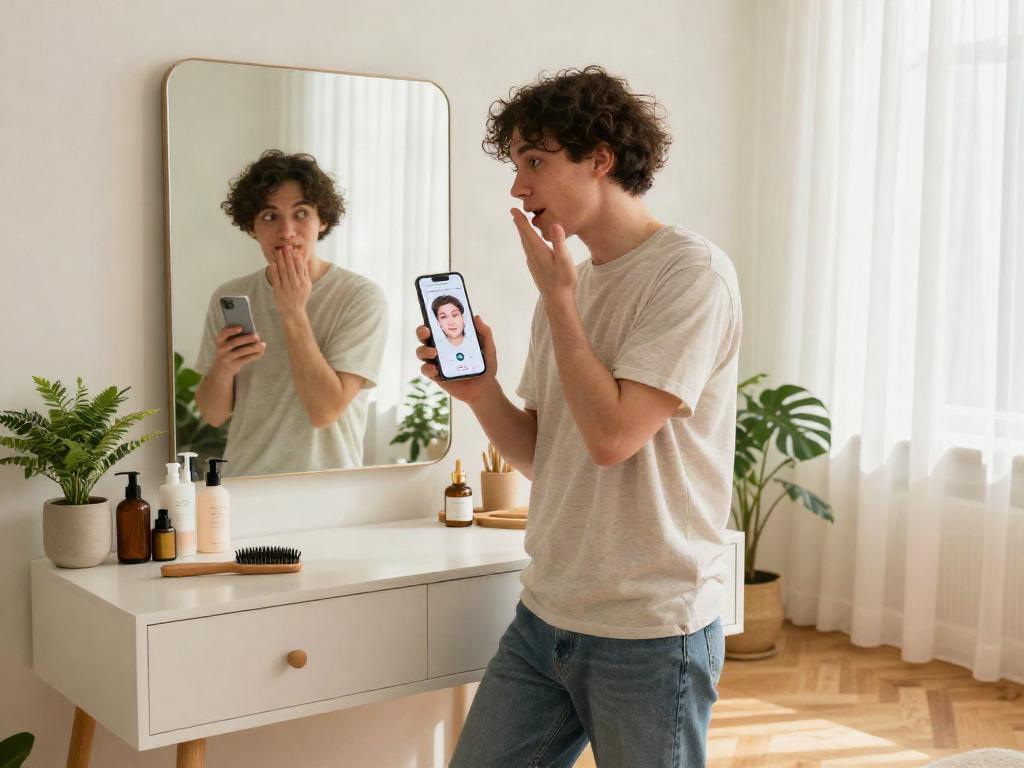
Understanding Age Estimation: The Basics
In today's digital age, the quest to determine one's perceived age has become more fascinating than ever. The ability to ponder the question, how old do I look, drives many individuals to explore various tools and applications designed for age estimation. With advancements in artificial intelligence (AI) and machine learning, age estimation has evolved into a complex field that examines facial features and skin conditions to provide a biological age estimate. This article delves into the fundamentals of age estimation technology, comparing popular tools and examining the benefits and challenges faced by users.
What Is Facial Age Estimation?
Facial age estimation refers to the process of determining a person's perceived age based on the analysis of facial characteristics. This technology utilizes AI algorithms to evaluate various features such as wrinkles, skin texture, and facial structure, which all play crucial roles in how old someone appears. Users can engage with this technology by uploading photos of themselves to receive an estimated age calculated by sophisticated algorithms.
How Do AI Algorithms Work in Age Detection?
AI algorithms for age detection primarily rely on deep learning models trained on vast datasets of facial images across different age groups. By examining these images, the algorithm learns to identify and correlate specific facial features with age markers. For example, the presence of crow's feet may indicate older age, while smooth skin may suggest youthfulness. These algorithms continuously improve as they process more data, enhancing their accuracy over time.
Common Myths About How Old Do I Look?
Misinformation often clouds the understanding of age estimation tools. Some common myths include the belief that these tools are entirely accurate or that they can predict one's age with absolute certainty. However, factors such as lighting, photo quality, and even the algorithm's training data can significantly influence results. Understanding these limitations is crucial for a realistic interpretation of the estimated age.
Comparative Analysis of Age Estimating Tools
With various applications available, it is essential to compare their features, functionalities, and user experiences. Notable platforms such as FaceAge.ai, Fotor, and BeautyPlus provide distinct approaches to age estimation.
How Old Do I Look vs. FaceAge.ai: Features and Functionality
Both "How Old Do I Look" and FaceAge.ai offer users the ability to upload photos for age estimation. However, while FaceAge.ai employs advanced AI algorithms to give detailed insights about aging processes, "How Old Do I Look" focuses more on casual usage and fun engagement. Each platform has its target audience, catering to differing needs, from serious inquiries about aging to lighthearted explorations of self-perception.
Accuracy and Reliability of Age Estimation
Accuracy varies across different tools, often influenced by the quality of the uploaded image and the robustness of the underlying AI algorithm. In comparative tests, some platforms excel due to their advanced training sets, while others may provide less reliable estimates. Users are encouraged to try multiple applications to gauge consistency in results.
User Experience and Interface Design
The user interface plays a critical role in the overall experience. Applications like Fotor feature intuitive designs that make it easy to upload photos and receive results quickly. In contrast, some less user-friendly platforms may frustrate users, leading to a negative experience. A streamlined interface enhances user engagement and encourages repeat usage, highlighting the importance of design in age estimation apps.
Benefits of Using Age Estimation Apps
Utilizing age estimation applications offers several benefits beyond mere curiosity about one's appearance. Many individuals find value in the insights provided by these tools.
Understanding Your Biological Age through AI
Age estimation apps can provide insights into an individual's biological versus chronological age. This information can be instrumental for those seeking to improve their skincare routines or make lifestyle changes that promote a younger appearance. The data derived from these applications can guide users in making informed choices that contribute to better skin health.
How Age Estimation Impacts Self-Perception
The feedback obtained from age estimation tools can significantly influence a person's self-view and confidence levels. For some, seeing a number that aligns with or is younger than their chronological age can boost self-esteem. Conversely, a result that suggests an older appearance may spark motivational efforts toward healthier living.
Utilizing Age Insights for Beauty and Skincare
Many skincare brands now promote solutions tailored to specific age groups. By using age estimation apps, consumers can identify their skin's needs, customizing their skincare routines accordingly. For instance, a user who learns they appear older than their actual age may choose to invest in anti-aging products, focusing on hydration and elasticity.
Challenges and Limitations of Age Estimation Technology
Despite the benefits, age estimation technology is not without its challenges and limitations. Users must navigate various factors that can affect their results.
Factors Affecting Accuracy: Lighting, Quality of Image, and More
The accuracy of age prediction can be heavily influenced by factors such as lighting conditions, image resolution, and the angle of the photo taken. Low-quality images can result in inaccurate age estimations, leading to frustration for users hoping for reliable results. Therefore, optimal lighting and good image quality are essential for accurate assessments.
Privacy Concerns with Photo Uploading
As users upload personal photos to see how old they look, privacy becomes a significant concern. Many individuals hesitate to use these tools due to fears about data security and how images may be stored or used. It's vital for developers to establish clear privacy policies and reassure users about data handling to alleviate these concerns.
Misinterpretations of Age Results and Their Implications
Users may inadvertently misinterpret the results generated by age estimation tools. A number alone can evoke negative feelings or unjustified self-criticism. Education about the technology's limitations and potential inaccuracies can help mitigate these emotional responses.
Future Trends in Age Estimation Technology
The landscape of age estimation technology is continuously evolving, with emerging trends set to enhance user experiences further.
Emerging Features for Age Estimation Apps in 2026
In 2026, we can anticipate the introduction of features such as real-time age estimation using video instead of static images. Advancements in AI could enable apps to analyze facial expressions and movements in real-time, providing even more accurate age assessments. Additionally, personalized skincare recommendations based on age insight may become commonplace.
The Role of User Feedback in App Development
Developers are increasingly relying on user feedback to improve their applications. By understanding what users like or dislike, they can refine their algorithms and user interfaces, making the tools more effective and accessible. Engaging with users through surveys and testing new features directly contributes to creating a better product.
Predictions for AI and Facial Recognition in Age Estimation
The future of age estimation technology lies in enhanced facial recognition capabilities. As AI continues to evolve, tools will become more adept at distinguishing subtle differences in features that correlate with aging, thus providing a more detailed breakdown of age factors. Moreover, we can expect a broader integration of these tools across social media and other platforms, making age estimation even more accessible to the public.
What is the best age estimator in 2026?
While the answer may vary depending on user preferences and needs, the best age estimator will likely be one that combines accuracy with user-friendly design, privacy protection, and integrated product recommendations based on the user’s age assessment.
Are age estimation apps accurate?
Accuracy is a relative term for age estimation apps; while many tools provide relatively accurate results, various factors can influence reliability. Users should approach results with a critical mindset and consider the context in which the estimation is made.
How do I use age estimation technology effectively?
To effectively use age estimation technology, it is essential to upload high-quality images with optimal lighting and avoid filters that may obscure natural features. Engaging with multiple applications can offer a more rounded view of how old one appears.
What should I consider before using an age estimator?
Before using an age estimator, consider the privacy policies of the application and how your data will be used. Additionally, be aware of the potential for misinterpretation and manage your expectations regarding the accuracy of the results provided.
Can these apps offer skincare advice based on results?
While not all age estimation apps provide skincare advice, many are beginning to incorporate features that offer product recommendations based on the user's estimated age and skin analysis. This trend is likely to continue as technology becomes more integrated with personalized beauty solutions.