When Sarah moved into her suburban home she inherited a patchy 8,000 sq ft lawn and an irrigation system that ran like clockwork—but watered her driveway more than her grass. After two summers of brown spots and a growing water bill, she wanted a plan that fit her yard, not a one-size-fits-all schedule. This guide matches common lawn problems to the right watering setup so you stop guessing and start watering smart.
Assess the Problem: Why your current watering fails (and the right hardware to fix it)
Most watering woes come from one of three issues: frequency, duration, or uniformity. Lawns that get light, frequent sprays develop shallow roots; those that soak too often waste water; and uneven systems cause dry patches. Start by measuring irrigation runtime and checking coverage. A quick test: put five identical cups around a zone during a 15-minute run to compare output.
Challenge → Fix: Small urban lawn with timing mistakes
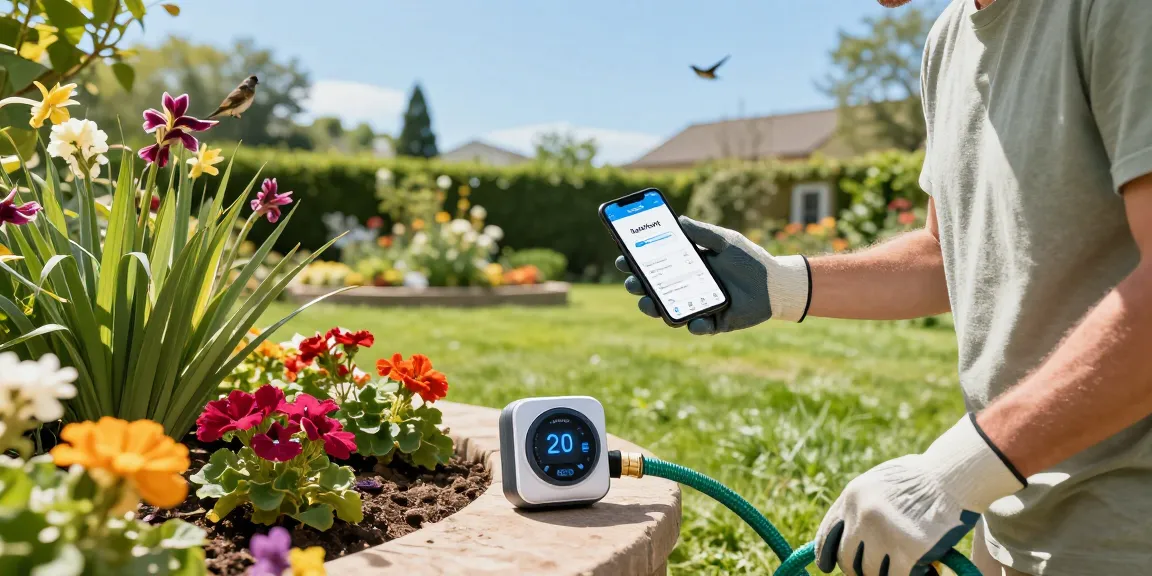
Scenario: A 500–1,500 sq ft front lawn on a timer set for every day at 6 a.m., with thin grass and lots of thatch. Problem: daily short cycles cause shallow roots and disease. Solution: switch to deeper, less frequent watering—two 20–30 minute sessions per week. For a smaller yard, a DIY mobile sprinkler or a hose-end timer paired with a soaker lawn strip works best. A WiFi timer such as the RainPoint model lets you set those longer, less frequent runs and skip days during rain.
Challenge → Fix: Large lawns with uneven coverage
Scenario: A 10,000 sq ft turf area fed by multiple zones, but one side is always dry. Problem: fixed sprinklers and aging valves create patchy coverage. Solution: upgrade to an in-ground, multi-zone system with matched sprinkler heads and a smart controller that staggers cycles to avoid runoff. For yards this size, a smart irrigation system saves water and keeps coverage consistent. According to the EPA, smart irrigation controllers can save homeowners about 8–15% on outdoor water use—amounting to thousands of gallons a year depending on lawn size (EPA WaterSense).
Designing a schedule by lawn type: specific plans that match turf needs
There’s no single schedule for every lawn. Soil type, grass species, slope, and local climate all matter. Below are practical schedules tailored to common U.S. yard types and what equipment pairs best with each.
Cool-season turf (e.g., fescue, Kentucky bluegrass)
Watering need: Generally needs 1–1.25 inches per week during active growth (spring/fall), more in heat. Example schedule for clay soil: once every 5–7 days, 45–60 minutes per zone split into two cycles to prevent runoff. For sandy soil, 2 shorter sessions per week with longer run times.
Warm-season turf (e.g., Bermuda, Zoysia)
Watering need: Often thrives on 0.5–1 inch per week in summer. Example schedule for sandy soil: one deep session every 4–6 days, 30–40 minutes per zone. Use smart controllers that adjust for seasonal evapotranspiration to avoid overwatering during dormant months.
Lawn TypeWeekly WaterTypical ScheduleSmall urban lawn0.75–1 in2× per week, 20–30 min sessionsLarge suburban lawn1–1.25 in1–2× per week, split cycles 30–60 minWaterwise/native turf0.5–0.75 in1× per week, deep soak 40–50 min
- Tip: Always split runs with 30–60 minutes between cycles for clay soils to cut runoff.
- Tip: Calibrate sprinkler output with the five-cup test to convert minutes into inches.
If you want a ready-made, step-by-step routine for your yard size and grass type, you can follow a lawn watering schedule that actually works to set up specific run times and seasonal adjustments.
Match the irrigation setup to the challenge: which tools to choose
Choosing hardware is about solving the core problem: do you need precision, coverage, or automation? Below are common yard challenges and the RainPoint-recommended matches.
Problem: Inconsistent coverage across large yards
Solution: In-ground pop-up sprinklers zoned by exposure and plant type, controlled by a smart WiFi timer. A large property benefits from matched rotor and spray heads plus a smart controller that sequences zones to reduce pressure issues. Real-life example: a 12,000 sq ft lawn converted to zoned rotors and a smart timer cut weekly runtime by 20% while improving uniformity.
Problem: Vegetable beds and narrow strips
Solution: Drip irrigation or soaker hoses placed along rows for root-zone efficiency. Drip kits deliver gentle flow and can be combined with a small RainPoint timer to water early morning for 20–40 minutes, ensuring deep soil moisture without wetting foliage. University extension studies show drip systems can reduce landscape water use by up to 50% compared to sprinklers (state extension publications offer localized figures).
Problem: Potted plants and mixed containers
Solution: Self-watering stakes, micro-drip emitters, or reservoir-style soaker lines with a small inline timer. Example: a balcony with 15 pots used 10-gph micro-emitters on a 30-minute daily morning schedule during summer, preventing frequent hand-watering and keeping root zones stable.
A WiFi timer from RainPoint can handle complex schedules across these setups, letting you skip watering during rain or shorten cycles on cooler days.
Practical implementation: sample weekly schedules and monitoring tips
Below are concrete, implementable weekly schedules for three yard situations and simple monitoring tactics to know when to adjust.
Schedules
YardFrequencySession LengthSmall front lawn (sandy)2× week25–30 min per zone (split into 2 cycles)Large turf (clay)1–2× week45–60 min per zone (split into 2–3 cycles)Vegetable garden (drip)3× week20–40 min per line, adjust for heat
Monitoring tips
Check soil moisture 2–4 inches below the surface with a probe or screwdriver—if soil is moist at that depth after watering, you’re hitting root-zone targets. Look for signs: deep green, springy turf means good moisture; footprints that don’t spring back indicate drought stress. Adjust timers seasonally—reduce frequency in shoulder seasons and during heavy rainfall.
For automated convenience, many homeowners pair zone-specific sensors with smart controllers so each zone only runs when needed. That combo is especially helpful for properties with mixed turf and plantings where needs vary widely.
As you translate these plans to your lawn, remember the goal: match schedule and equipment to the exact problem. With the right mix—sprinklers for broad coverage, drip for precision, soakers for beds, and a reliable timer to orchestrate it all—you’ll save water, lower bills, and grow a healthier lawn.